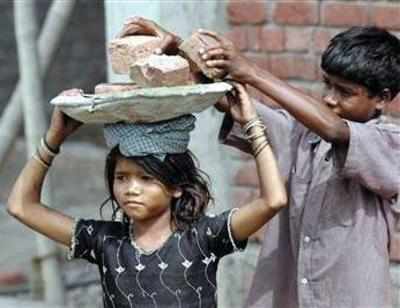
Have you ever searched on google, what is the per capita income of India in 2019-20? I think you must have aware about it? It is Rs. 11,254 per month, i.e. Rs. 1,35,048 per year, and Goa has the largest per capita income with around 4,30,000 per year and one state with per capita income of 43,000 only. Yes, 43000 only.. You can see the difference, there is gap of Rs.3,87,000. At one side of India, a person is getting Rs. 35,840 per month and on the other side, a person is getting Rs. 3,584. There is a 10 times difference between these two states. The state I am talking about is Bihar. Bihar has a literacy rate of only around 64% (lowest in India) which is below the nation- average literacy rate i.e. 74%. We have different questions in our mind, and we will get all these answers but before that get some facts about Bihar:
- The renowned Mathematician, Aryabhatta hailed from Bihar
- Some of India’s greatest emperors belong to the state of Bihar namely Ashoka, Vikramaditya and chandragupta
- Shri Rajendra Prasad, India’s first president of India was born in Bihar
- Nalanda, World’s oldest University, which attracted students from all over the world in ancient times.
- Lord Mahavira, the last jain tirthankara was born in Bihar
- Munger, India’s oldest city producing guns since 1800s
- Bihar is the state which is considered as the second most IAS producing factory.
- Bihar is the birthplace of tenth Guru that is Guru Gobind Singh and the holy place of Sikhs is Harmandir Takht which is in Patna.
- Most of the Bihari people are considered highly intellectual in Mathematics
- Patna has the world’s longest Wi-Fi range of 20kms which is in Bihar.
- Bihar plains are among the most fertile plains of the world. Formed by mighty rivers like Ganga, Koshi and Gandak.
- Nalanda library was so huge that it kept on burning for three months and it destroying nine million manuscripts.
In 1960, according to NSDP, the lowest per capita income was on Bihar and In 2020, the same condition is there.
According to multi- dimensional poverty Index, the values of UP and Bihar is same as Congo and Malawi, which are poor african countries.
There are many historical problems are responsible for this:
- a) Unequal land distribution- Permanent settlement act was introduced by Lord Cornwallis in 1793. At that time, Britishers source of income from farmers of UP and Bihar was from tax. There were three main ways to collect tax:-
- Zamindari system
- Ryotwari system
- Mahalwari system
Zamindari system was there in provinces of Bengal, Bihar, Orissa and Varanasi. Zamindars were recognized as owner of the lands. Zamindars were given the rights to collect the rent from the peasants. Because the agriculture output was falling, the tax collected by Britishers was also low, thats why in 1793, britishers fixed the tax for each zamindar. That’s why the peasants had to give the fixed tax, drought, flood etc did not matter, anyhow they had to pay fixed tax. This often led to the land of peasants being taken away, creating rural caste- class conflict. Researchers also found that “With the mounting frustration of peasants, more and more areas came under the hold of the Naxalbari type movement.
In the provinces like Bombay and Madras, the tax was not fixed, they were paying taxes according to the agricultural output.
The zamindari system was abolished in 1947. But its negative impact continues in UP and Bihar. To prove it, Nobel peace prize winner Abhijit benerjee and Lakshmi Iyer compared the states in which zamindari system was imposed and not imposed. There they found that:
States with Zamindari system in 1870s and 1880s led to
- Lower agricultural yields in 1960
- Lower literacy rates in 1980s
- Higher infant mortality in 1990s
- More crimes like murder, kidnapping, rapes in 1990s
- b) Lack of investment in agriculture:– In 2002-03, 33% of households in Bihar was landless and 15% of the households had less than 400 m sq. of land. This means that most of the lands was with zamindars, and those who work on land have no money to invest and those who have money, no reason to invest. And most of the people migrates also therefore there is little investment on agriculture sector. Apart from private investment, there has been very little public investment in agriculture.
% of land irrigated
- Bihar- 50%
- UP- 60%
- Gujarat- 87%
- Punjab- 90%
In 1980s , many farmers in Bihar and UP started using ground water but it did not lead to a rise in productivity because
- Electricity supply was inconsistent
- Prices of diesel, petrol, fertilizers increased but the prices of harvest did not increased.
- While other states could provide subsidies to their farmers but UP and Bihar could not.
The small landholdings of UP and Bihar farmers make it difficult for them to sell at govt. mandis because their transportation cost could be higher than the price . They might not get profit.
The agricultural sector is vital for UP and Bihar because of :
- Heavy dependence on agriculture as the contribution of agriculture sector in India is around 20% but for the Bihar , it is double
- Presence of fertile land due to Ganga passing through the two states.
2. Freight equalization policy– India’s government FEP of 1953 removed Bihar’s mineral wealth advantage. FEP was aimed at promoting equitable industrial development by subsidising long-distance freight transportation. It may be worth noting that FEP applied only to certain commodities such as iron, steel, cement, which were deemed essential for the economy but did not apply to raw materials like cotton. Hence, the states such as Maharashtra and Gujarat, which benefited from the FEP, also maintained their hegemony of raw materials such as cotton. While the manufacturing industries started moving west and south, eastern India didn’t get an opportunity to set up cotton and textile mills as cotton was not subsidised under this scheme.
The states of West Bengal and Bihar (including the part that is now Jharkhand) in 1950 accounted for 92% of the country’s steel production and 48% of all manufacturing. The states were rich also in coal and other natural resources. At that point in time, only two integrated steel plants (ISP) existed in India: one at Jamshedpur, Bihar, and the other at Burnpur, West Bengal. However, the Planning Commission decided also to provide subsidies on freight transportation to industries anywhere in India, thus negating the advantage a manufacturing industry would have if they were located closer to the steel plant. Bihar’s Industrial sector got effected due to this policy.
The policy was changed in 1991, but it has had a lasting impact on Bihar’s economy.
e.g. Private investment in 1995 in Bihar was 2.68% while on other 14 major states, it was 16.45%
The lack of Industrial sector , puts a lot of pressure on the agriculture sector in UP and Bihar. From 1971 to 2001, the % of people working in agriculture in India got low but in Bihar, it was high. But due to lack of growth in the agriculture sector , people had to migrate.
UP and Bihar has highest migration rate in country according to ASSOCHAM
3. Cast- Based politics: Post- independence , high-caste elites had power in UP and Bihar, after 1970s weaker sections of the society started organizing themselves like samajwadi party, janta dal etc. But the political mobilisation has not improved the economic prospects of UP and Bihar. Bihar had also suffered from political instability for decades, e.g. From 1961 to 1990, Bihar saw 20 government , none of which completed their terms (which means govt. was more focussed on their politics, not in making reforms)
4. Lack of funds from the centre– From 1951 to 2012, Bihar recieved the lowest developement funds on the basis of per capita while other states like Maharashtra, Harayana, Gujarat got doubled fund. The fund that Bihar got was less than half of the national average. Lack of funds could meant that the states could not invest in education , health, agriculture or the industrial sector, and one more reason was that government was so unstable and incapable in administration that they were not able to collect tax in a proper way. They were also unable to use the money they were given (through tax and other forms). We can also see that In the 8th and 9th plan, Bihar’s utilization rate of their developement funds was only 50%. This shows the incapability of administration.
British govt also had not given importance in the state of Bihar as the expenditure that they made in 1876 and 1927 was very low for general administration, education and health sector. Citing the original 1930 report, while there was one police officer for every 776 individuals in Bombay presidency, in Bihar there was one police for every 2,372 individuals.
There are some of the other reasons also:
1. Geographical Disadvantage: As Bihar is a landlocked state and there is no international geographical location like Gujarat, Maharashtra, Karnataka , Kerala, Tamil Nadu which have more opportunities to go for international business. But Bihar has to pay more transportation cost and all, and it also has drought ridden area as well as flood hit area which forces people to migrate .
2. No major industry: There was no major industry in Bihar, the situation became worse when jharkhand was separated from Bihar, most of the minerals, corporates, minings, Bokaro steel city, tatanagar jamshedpur that all got seperated from Bihar.
3. Frog in the pond think it’s An ocean: Most of the students from Bihar only wanted to become IAS/IPS officer due to which , they are not focussing more on entrepreneurship.
4. Higher fertility rate: Fertility rate of Mother in Bihar is high, due to which the population get increases.
What are the solutions that should be taken:-
1. Increase land security through land redistribution or other reforms. Increasing security of land would make people invest more in their land. The govt also digitise land records and speed up land cases.
2. Greater support from the central government.
3. Make states industry- friendly by improving investment climate and law & order.
4. Use Bihar diaspora working in other states and countries.
5. Bihar has youngest population and hardworking person in India , so they should focus more on making their state proud through entrepreneurship like Anil agarwal ( founder and chairman of vedanta Resources plc., Ravindra kumar sinha, founder of SIS security etc.)
Nitish Kumar is hailed as a leader who has bought attention to Bihar’s development. Bihar’s growth rate has increased under Nitish kumar-
Between 1993- 94 and 2005-06, it was 4.8% and Between 2005-06 to 2011-12 , it was 13.5%.
Bihar has significantly reduced poverty over the last few years but need to improve much more………..
 SANJAY KUMAR
nice information with facts and figure
LikeLike
Thankyou..😊😊
LikeLike
Wonderful research. A major problem which Bihar also faced was during the 90s when the economy was liberalised.Most of the states attracted foreign and private investments by providing them incentives.This led to a quick growth of the other states. Bihar, on the other hand was more involved in politics and the govt.’s focus was more on social development rather than economic development. As a result, no new industries were set up and also the existing industries were shut down.The situation was worsened by the law and order issues which affected the businessmen. As a result, first the businessmen migrated and then the labourers as there was no employment available. Even the new govt could not do much on the economic investment front. Bihar needs industries as early as possible.
LikeLike