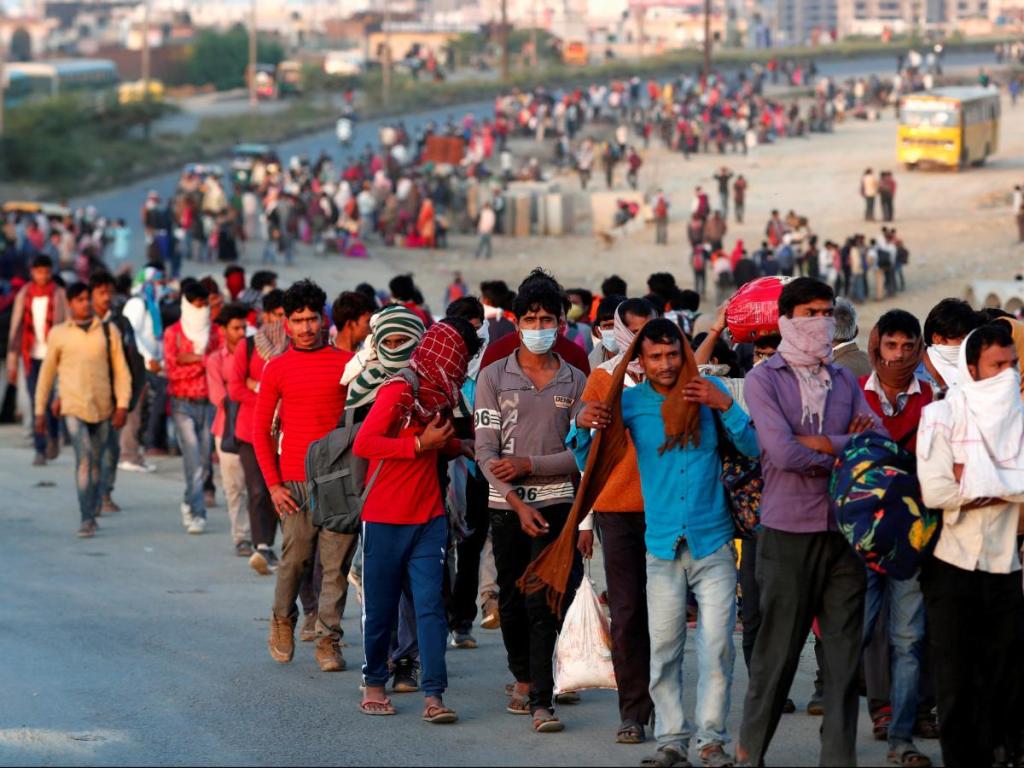
It’s been almost 2 months, the country is on full lockdown, As a result , the economic wheel of a country has slowed down. It is the Economically Weaker Section and low group income people who are badly effected. Although everyone is effected in some or other way, but people belonging to this category of socio-economic strata are more vulnerable.
In this blog, we will discuss about the economic impact of migrant workers.
First, we need to know 1) what is migration?
Migration is the movement of anything from one place to another but here we will talk about human migration.
2) How do we know who are migrating?
GOI collect this data from census which is done for every 10 years, Government takes the note of government by looking the current place of residents, if its anywhere other than their last residents, then it is counted but Today there are other ways to count. e.g. from your employer, any utilities or services that you are availing which requires your ID proof, that’s how government can easily figure out whether you are a migrant or not? but primarily it was through the census data.
Now, migration can be seen from four angles-
- Intra-district 2) Inter-district 3) Inter- state 4) from abroad
Here, we will talk about domestic one and we will exclude ” from abroad”
Intra – district– It refers to the movement between a single district ( 1,2 cities, few towns, villages)
Inter-district– Movement between two district . e.g. Punjab has 22 district. so people can move from one district to another within a state.
Inter-state– Movement from one state to another . e.g. from Jharkhand to Maharashtra
3) Why people migate?
This can be broadly categorized into Push factor and Pull factor
People move from one factor to another factor, only if they find value in it.
Push factor- These are causes or situations which make people to leave that place. It can be poverty, unemployment, lack of basic infrastructure like healthcare, education etc. Apart from these factors, natural disasters like flood, cyclonic storms, T sunami, earthquake etc. are also some of the reasons behind push factor.
Pull factor- These are causes or situations which attract people from different places. This is opposite of push factor. e.g. hope of better opportunities, work with relatively higher wages, better opportunities for education, healthcare etc.
There are 4 streams that identified under internal migration-
R-R R-U U-U U-R
When someone move from R-R (Rural to Rural ) area, they move in the search of better opportunity, education , coachings etc. These are categorized into pull factor , and for U-U, people move for better economic opportunity like better job, institutions etc.
Look at the economic division of a society-
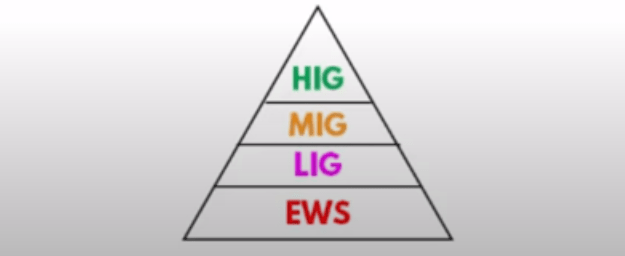
High income group, Middle income group, Low income group, Economic weaker section.
Government using these division for various housing schemes. Migrant can be put into anyone of the division.
workers who migrated from one state to another are more vulnerable as compared to them who migrated within the district as we have seen in the lockdown where those persons are not able to reach home.
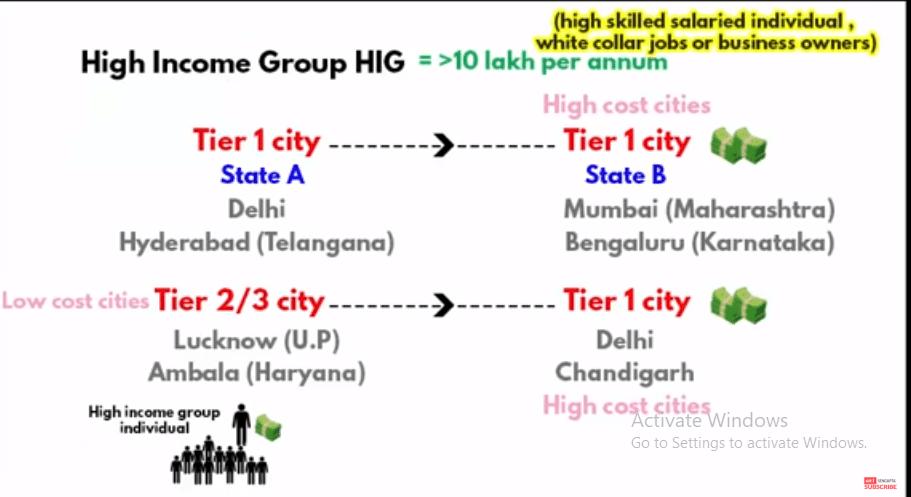
As we can see from the picture, that mostly HIG people move from Tier 1 to Tier 1 city or Tier 2/3 city to Tier 1 city. Mostly HIG people have a salary of approx 10 lakh per annum ( Roughly estmation, not exactly).
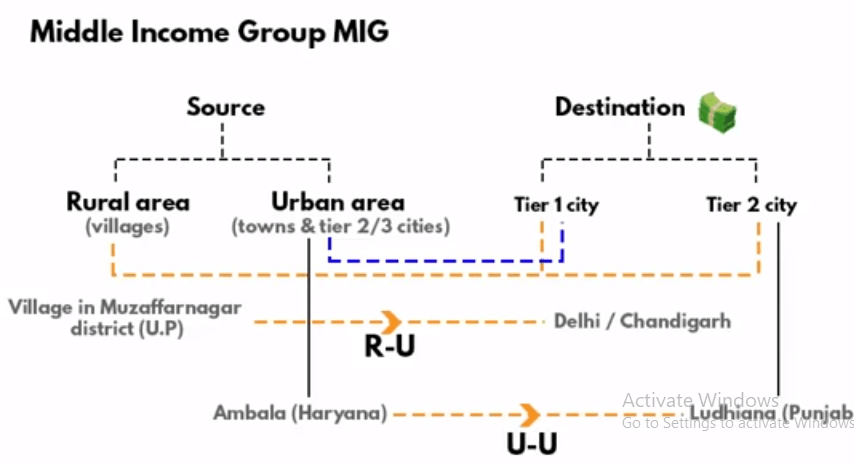
The above picture describes about the migration of a MIG people from R-R or U-U area. Pls see the picture, you will understand better.
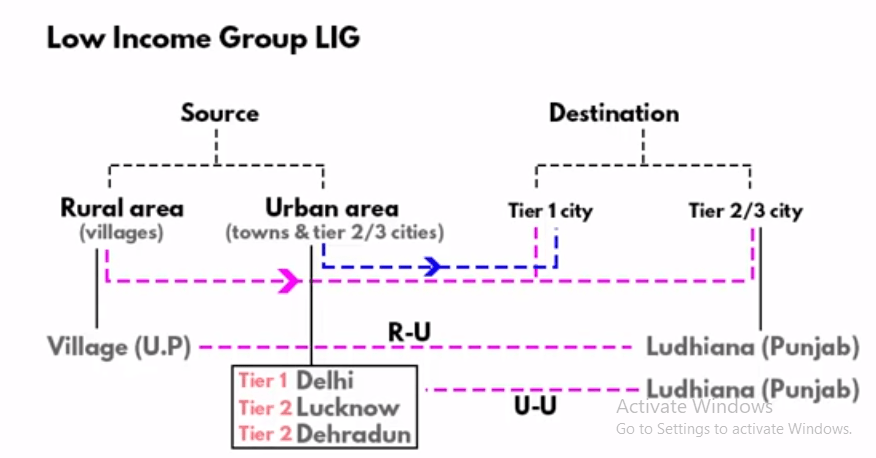
A person who works on luhiana in a manufacturing plant has originated from a village UP is a example of R-U migration
Similarly, a person working in a manufacturing plant of ludhiana migrated from other states or union territories like Delhi, Lucknow, Dehradun etc. due to pull factor. It is for U-U people.
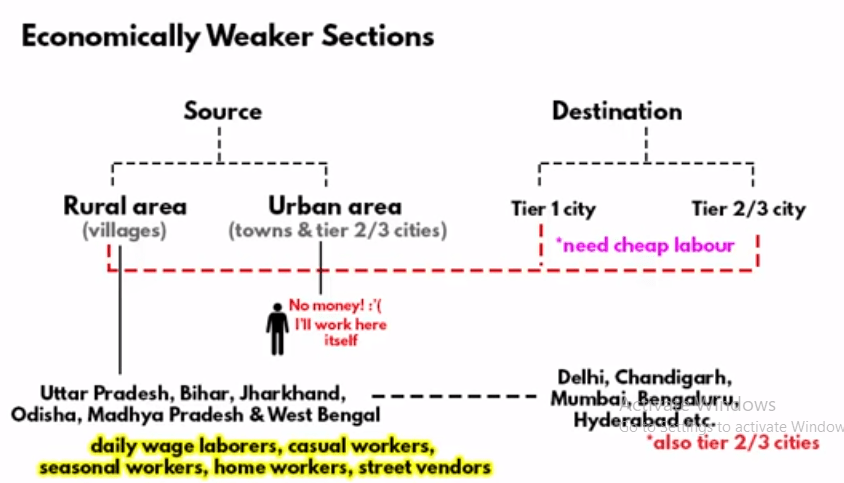
From the above picture , we can understand about the EWS movement which are mostly from rural areas like UP, Bihar, orrisa etc. and they are daily wage workers, laborers etc. They move from rural area to urban area for their livelihood and to earn money.
As we can see, during the lockdown, somehow HIG, MIG people survived because of their savings, full salary and partial salary and they also have their accomodation on the respective states so they need not to be worry compared to LIG and EWS people.
But the EWS and LIG people are badly effected because of their daily wages, informal income etc. They are daily wage workers, casual workers, seasonal workers, home workers , street vendors etc. who are mostly from rural areas. Due to this lockdown they are not able to earn money in this high-cost big cities nor they are able to go back to their villages because all the long distant transportation are shut, as a result you might have seen that many migrant workers trying to get back to their homes by walking 700 , 800 and more kilometers.
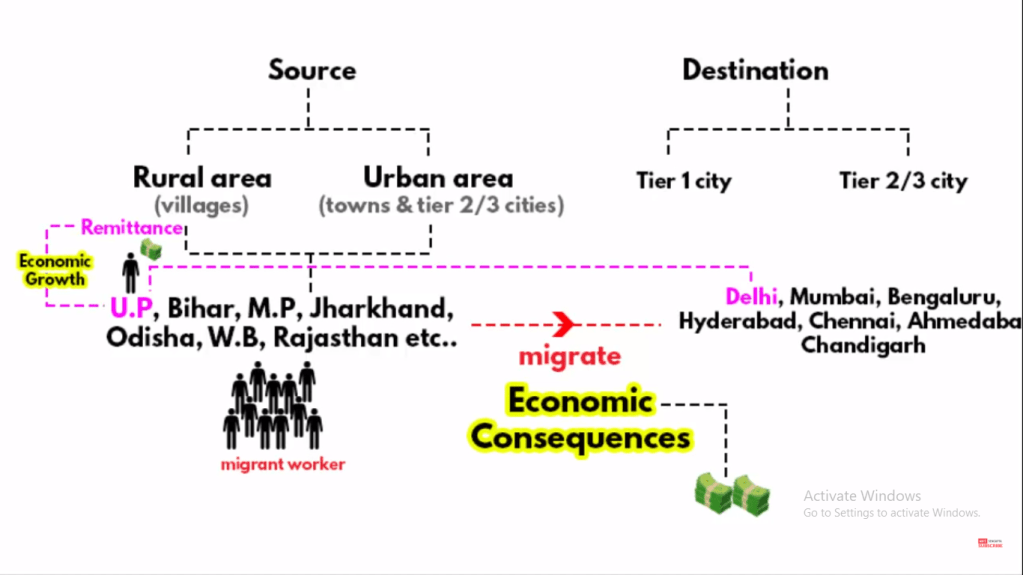
A person who is from UP and his/her livelihood is in Delhi. He/she earns some money and send it back to their Village. Some amount of this money that has been sent to the village is called Remittance. The amount of remittance is sent to their home plays a major role in economic growth.
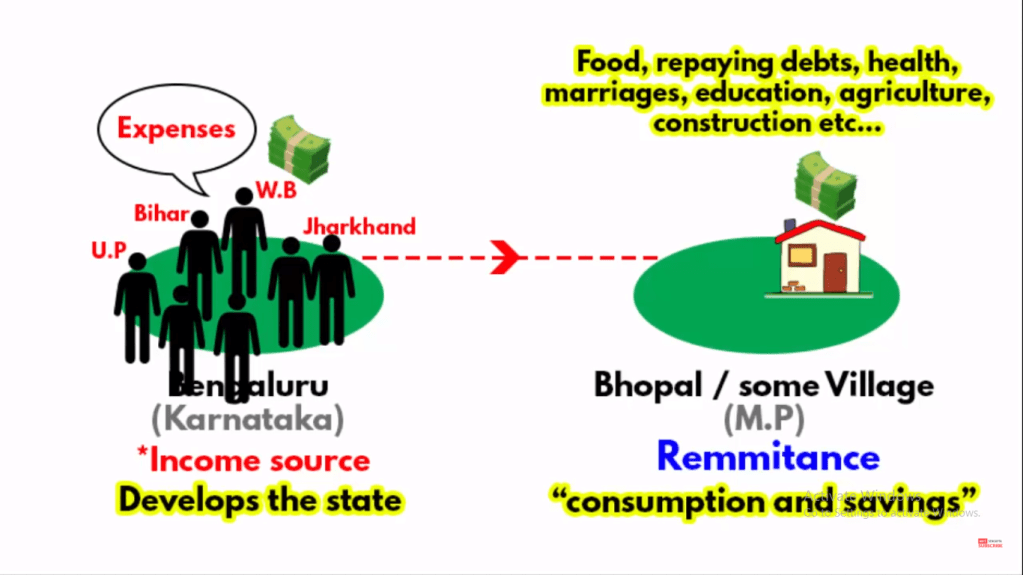
Suppose, you are working in the city of Maharashtra and your family stays in Bhopal, so whatever you earn in Maharashtra, first you have to deduct your expenses as It is a high-cost city to live in, the you think of sending remittance to your home. Now, this money is mainly used for food, repaying debts, health, education, agriculture, marriages, construction etc. So when you send remittance to your home, then it is used for consumption and savings, and it plays a major role in economy. So, Maharashtra becomes the income source. If you notice, then Madhya pradesh’s economy is somehow driven by Maharashtra (income source area) in this example.
For Migrant workers source region like UP, jharkhand, bihar, orrisa, west bengal, MP etc, Remittance work as a life blood in their economy. Similarly, the opposite is also true, The income source area Maharashtra in this example also gets benefitted because many persons from these areas are coming here to work and that results into development of the state. As you have seen, migrant workers are important for both their home region and income source region in their economy.
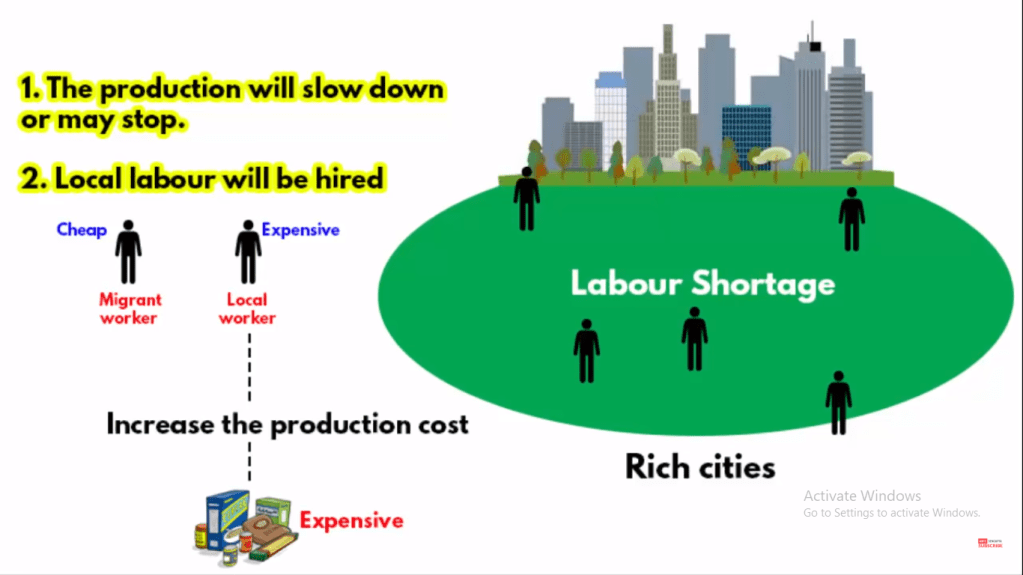
But in this lockdown, many of the migrant workers faces problems, as a result they might find work closer to their home or in their home states that means it will put economic and infrastructural pressure in their home state and we know the state govt. of these states ( UP, Bihar, MP etc, basically the home region) can not do much because their finances are weak as the economy of these states are somehow driven by those big-cities, and now the workers come to their home, they don’t have any work but they have to eat, so their dependence on home-states agricultural sectors will rise. Now that is a serious problem, but if you look at the positive side then this is also a perfect time for these states to kick-start their MSMEs in the states and provide employment to these workers who have returned home. All these states can meet these challenges but for this , it will need all the support from govt. like tax benefits, aid, policies etc.
If we look the situation on the big-cities point of view then there will be a huge labour shortage in the companies, factories and local businesses due to which two hings can happen’
- Production will slow down or may stop
- Local labour will be hired.
Now, one of the important reason for these migrant workers to be hired is because their cost is cheap, The local labourers are not cheap due to which the cost of the product will increase. So, these are the economic importance of the migrant workers if they don’t come back. They are very important for us to run the economy.
I want to share one article with you by Harish Bijoor-
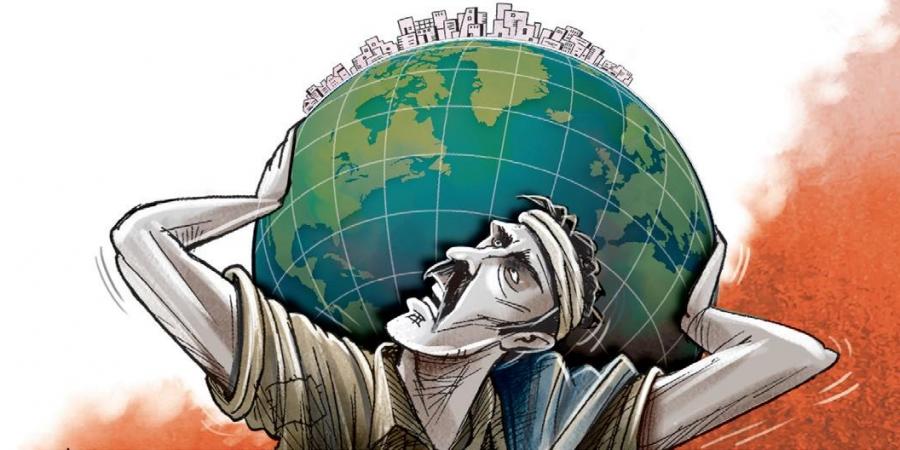
The migrant workers are the builders of modern India. Time to take care of them
I studied about the builders of modern India in history books at school. The names I still remember are many. Raja Ram Mohan Roy. Sardar Patel. Jawaharlal Nehru. J R D Tata. And not one mentioned the migrant labourer.
To me, the migrant labourer is the builder of not just modern India, but modern Singapore, modern Dubai and every modern country that prides itself on the glamour list of modernity.
In real and physical terms, there is no one to replace the hordes of migrant labourers who have sweated it out, putting together every edifice of everything from the Taj Mahal to the Trump Towers in place. Every office space we use, every home we now stay confined to, every club and every discotheque we have danced in, has been built by a migrant labourer.
The migrant worker is therefore a gig worker. I am sure they will baulk if they ever heard this snazzy but alien phrase to refer to them. But they will never ever hear it, or read this article for that matter, as they are distanced from it all. They are a part of society that is there and yet not there. In many ways they are a part of “Invisible India”.
India can be cleaved into two. “Visible India”, that belongs to most of us, and “Invisible India”, a part that is unrecognised, un-feted and dusted under the carpets most of the time, belonging to a host of 126 million migrant workers who work silently.
These are the folk who build that modern skyscraper and see it emerge from the dust, hollow-concrete brick by brick, and these are the folk who will not be there when that snazzy inaugural function declares the building open. Firstly, they are not invited. Secondly and more importantly, they just don’t have the time. They build and scoot to yet another site where they will build yet another edifice for modern India. Yet another edifice that means a daily wage and a livelihood.
126 million is nearly the population of Japan. Migrant workers as many as the population of Japan are forever on the move in India to keep the big city rolling. In many ways this is back-end India that offers the much-needed daily support to front-end India to keep the wheels of the modern economy moving.
They come in many avatars. There is a hierarchy even. There is the Uber and Ola driver who has migrated from Begusarai to Bengaluru. There is the mason, the carpenter, the food delivery boy, the painter, the plumber and many, many others. Let’s call them gig workers for now, who leave their villages in search of income to live a decent day and repatriate what remains to their families.
I will not be wrong if I add yet another population of 20 million, nearly as large as the population of Sri Lanka, to the population of the migrant worker. These would be second-generation migrants who now have settled themselves into the ecosystem of the city, living in the shanties and the slums, forming part of the support system of driver, maid, beauty parlour worker, car cleaner and security guard alike.
These people live on the periphery of visible existence. Most have left their identities back in their villages and don’t have one in their destination cities. Their vote is not mobile, and therefore they are non-participants, by and large, in the democratic process of the vote. Many live remote single lives, staying in touch with their families once a week through the small top-up prepaid mobile connection that is their lifeline with their roots.
The migrant labourer of India has largely remained a faceless entity till now. In comes Covid-19, and the plight of the gig worker at the rock bottom of the pyramid of prosperity is in public showcase. I think it is time for us to recognise “Invisible India” as part of the exciting “Visible India” we wish to boast of today and in the future.
It is important for us to take cognisance of every point of need—social, economic, political and psychological—that the migrant worker deserves. It is important for us to understand that front-end India would not be what it is today without them. It is important to appreciate as well, that they deserve a more equitable share of the spoils.
In closing, I must jump into my dengue mosquito analogy. Modern and prosperous India is all about living in the best of locales in gated enclaves. And just outside these gated enclaves, or very close to them, live all those who serve the needs, wants, desires and aspirations of those who live within those hallowed gates.
The gated-enclave mindset is to keep their homes and gated-enclaves clean and tidy. And they do, with the help of the support system that lives outside.The Aedes aegypti, which had us all scared during the last dengue outbreak, breeds in cesspools and locales that do not follow good hygiene. Many breed in the slums and shanties around our gated enclaves.
The mosquito bites those around in the slums and shanties and flies in gracefully through the gates of the enclave and bites all of us who belong to Visible India. It spreads the pain of the disease equally and does not know the difference between the “Visible Indian” and the “Invisible Indian”.
The blood of both tastes just as nice, I guess. If we don’t want to get dengue, we must take care of more than what we see and what we care about.
Time then for “Visible India” to take care of “Invisible India”. Not with the benign purpose of being good people alone. Not with the purpose of being charitable alone. But with selfish reasons as well. Touche!
 SANJAY KUMAR
Well explained with facts and figures
LikeLiked by 1 person
Thankyou for your valuable feedback 😊
LikeLike